loading...
Showing posts with label Sport Car. Show all posts

Saturday, May 5, 2012

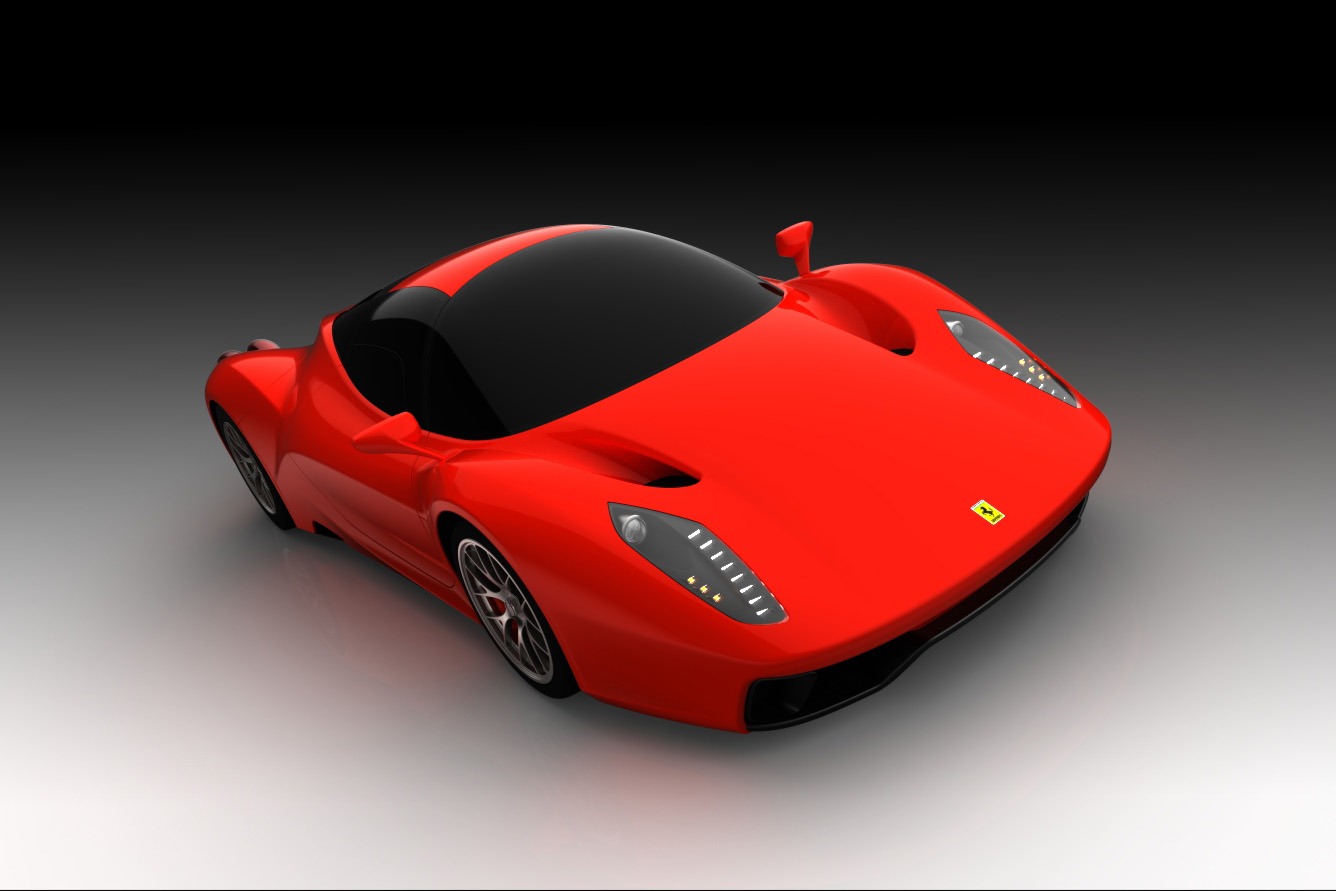
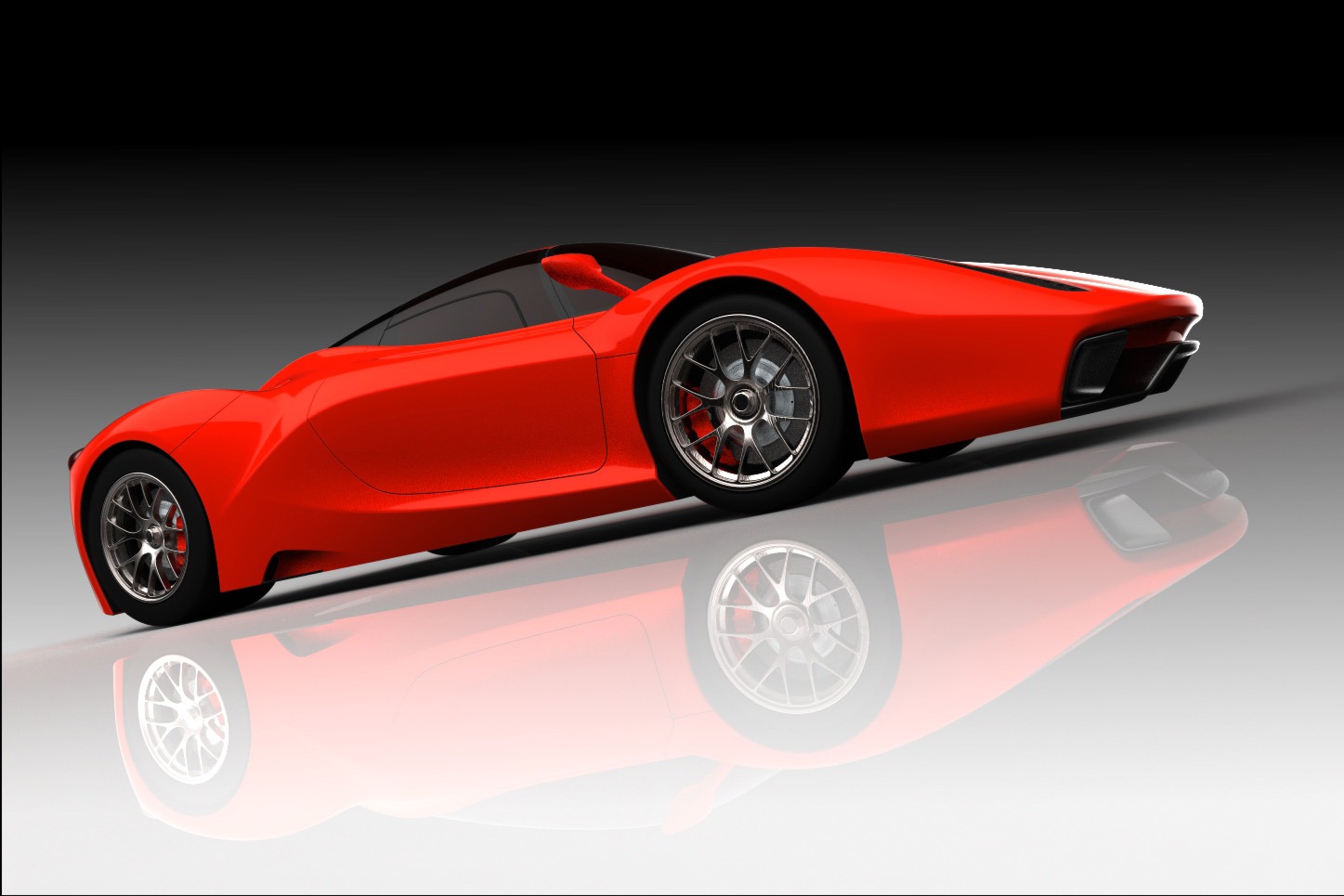
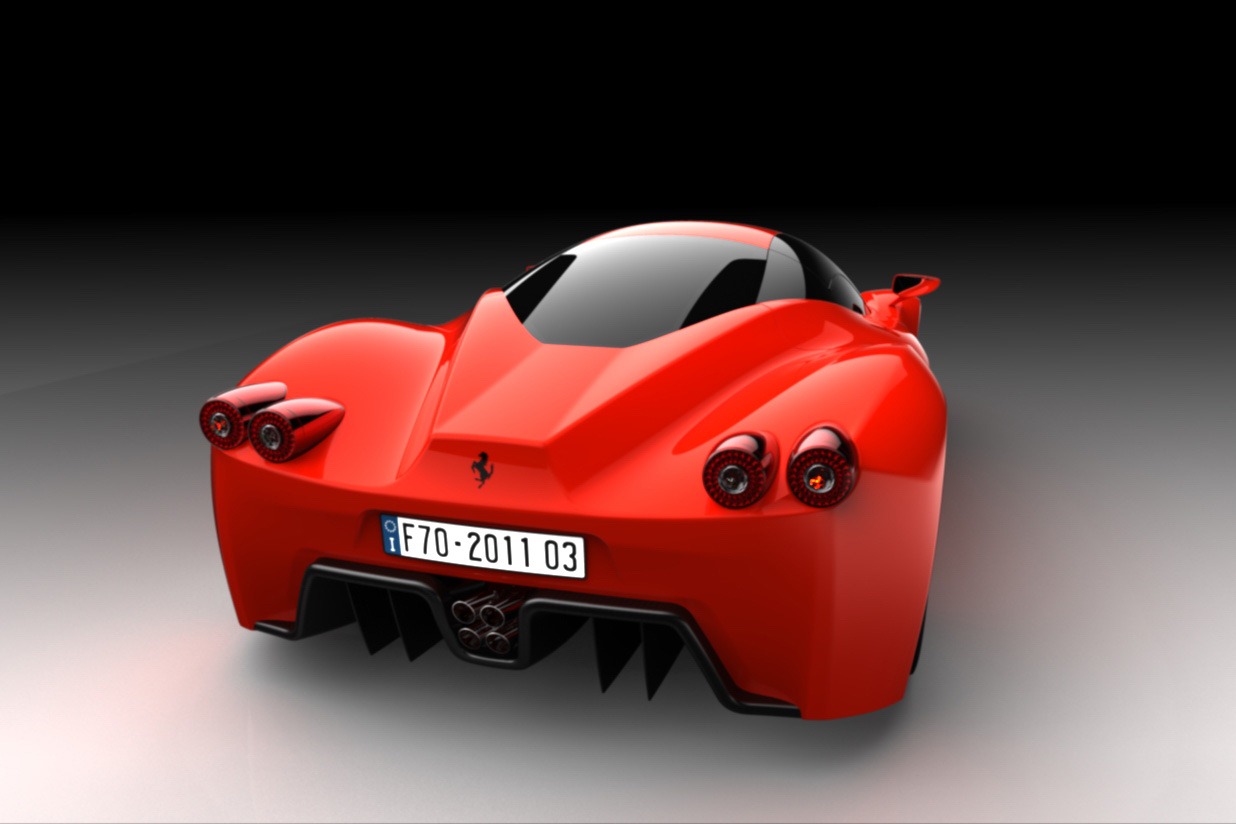
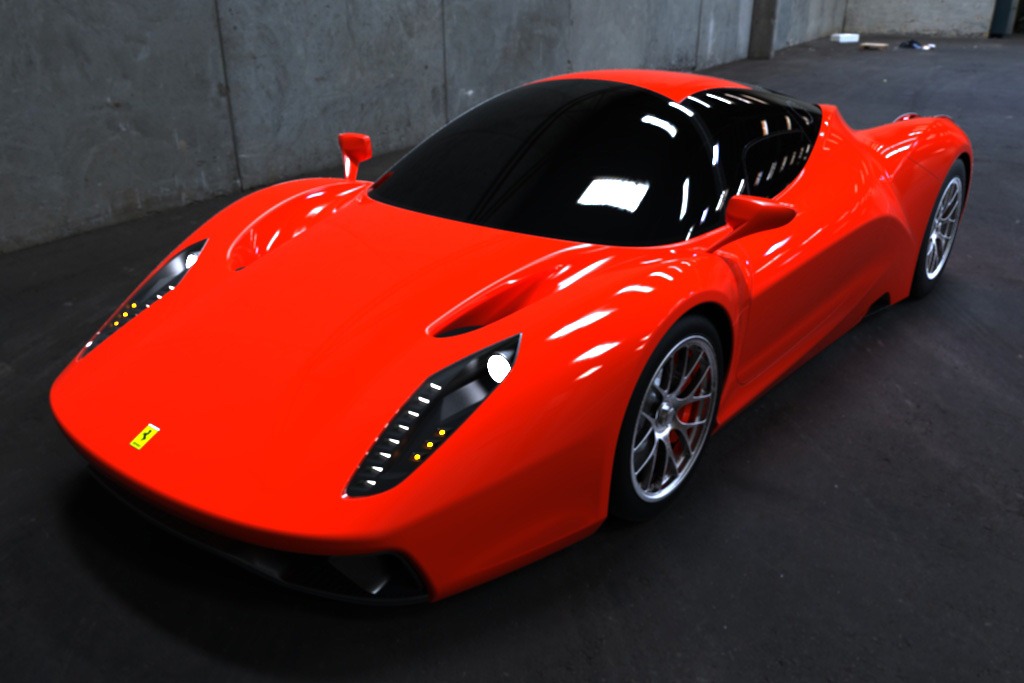
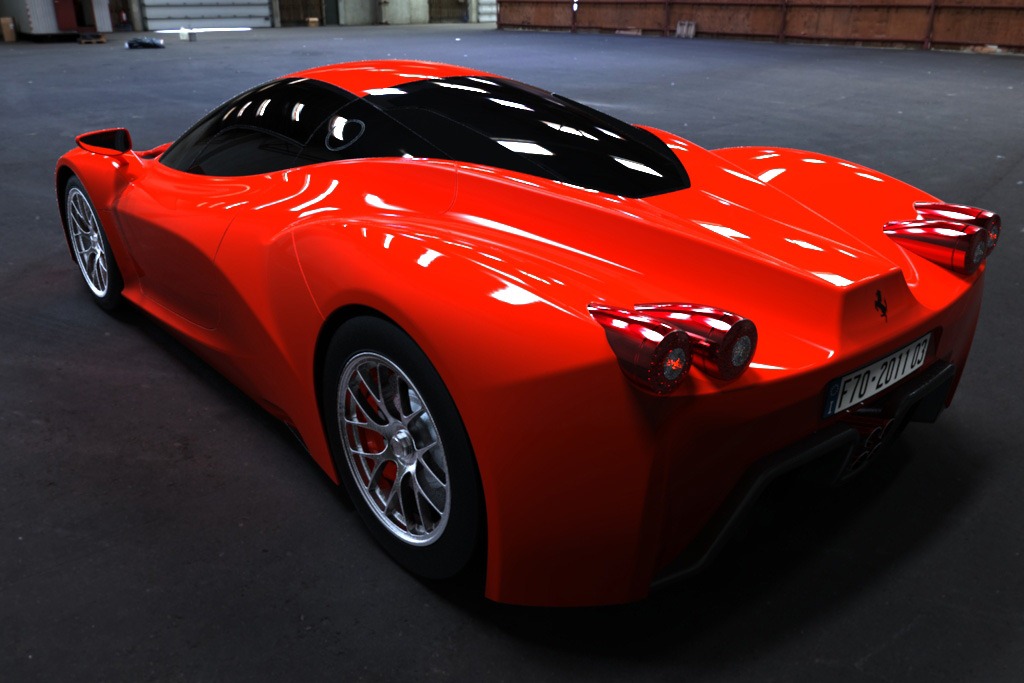
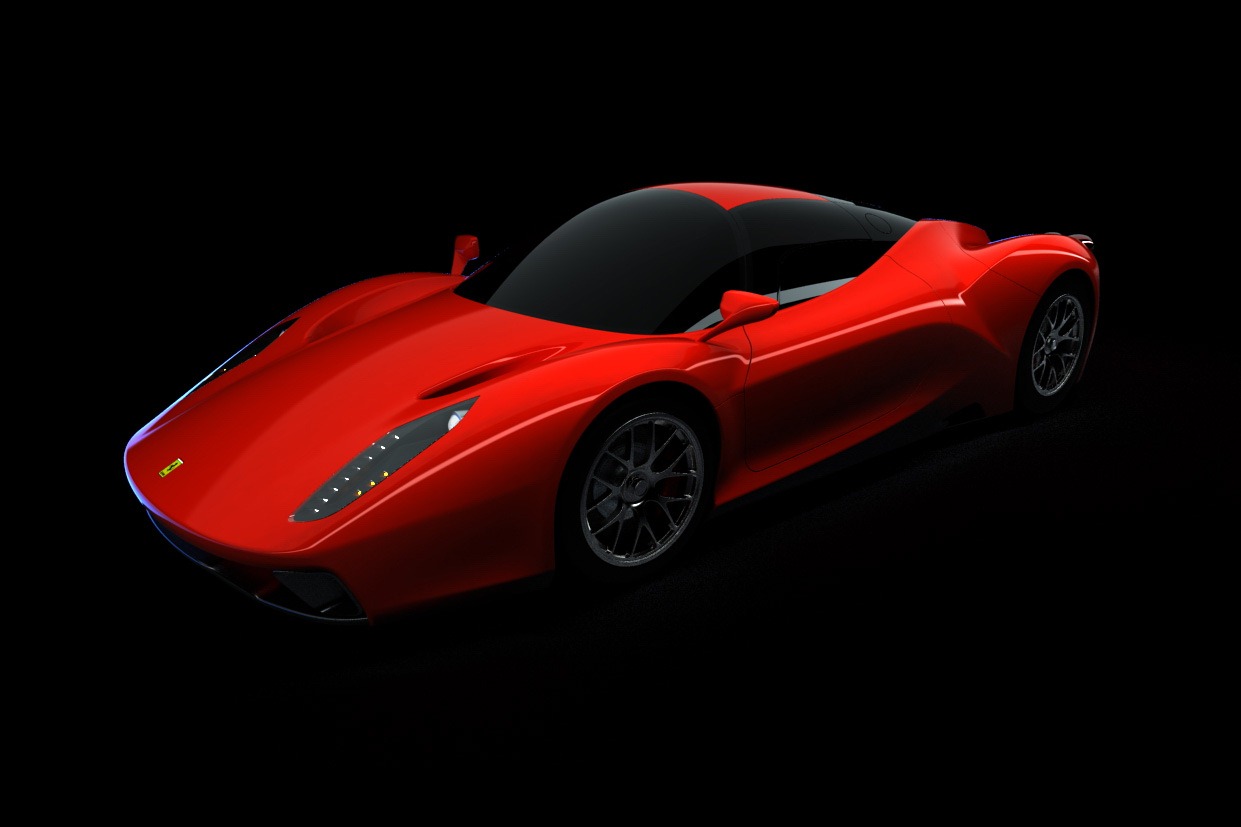
Ferrari F70 Supercar Design Study :Constantin-Gabriel Radu

the Ferrari F70, hits showrooms in late 2013?
For now, this is a question that will likely remain mercifully answered, but we have an interesting design study for the Ferrari F70 that was penned by industrial designer and current employee of Pininfarina's German subsidiary in Rüsselsheim, Constantin-Gabriel Radu.
The concept borrows elements from both the Ferrari 458 Italia as well as the previous Enzo, combining curves with hard creases and a teardrop glasshouse. If this design were to be produced, we would imagine that the car would obtain more air vents both on the sides and more importantly, on the rear end.
Before we let you flip through the rest of the images, we will remind you that at last week's Beijing Motor Show, Ferrari previewed its new HY-KERS hybrid system that's bound for the Enzo's successor and which links a V12 engine to a pair of electric motors, one to power the car's auxiliary systems, and the other to drive the rear wheels.
It is believed that that combined output of the twelve cylinder engine and the electric motor will surpass the 900-horsepower mark.
Photo credits: Constantin-Gabriel Radu
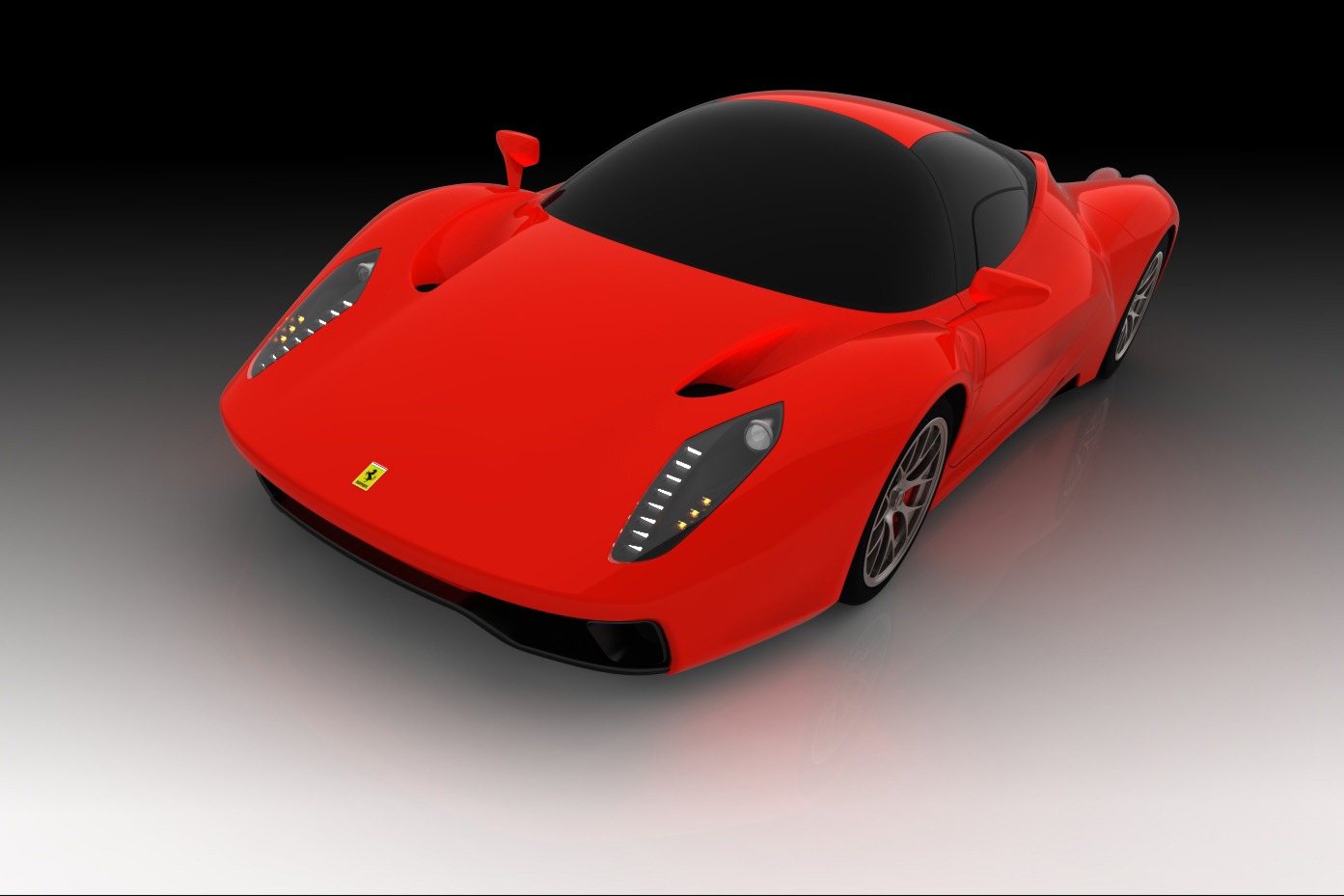
PHOTO GALLERY

Ferrari-F70-Design-1Ferrari-F70-Design-2Ferrari-F70-Design-3Ferrari-F70-Design-4Ferrari-F70-Design-5Ferrari-F70-Design-6Ferrari-F70-Design-7Ferrari-F70-Design-8Ferrari-F70-Design-9Ferrari-F70-Design-10Ferrari-F70-Design-11Ferrari-F70-Design-12

Friday, May 4, 2012

Kia Elan Roadster is a Lotus for the Masses


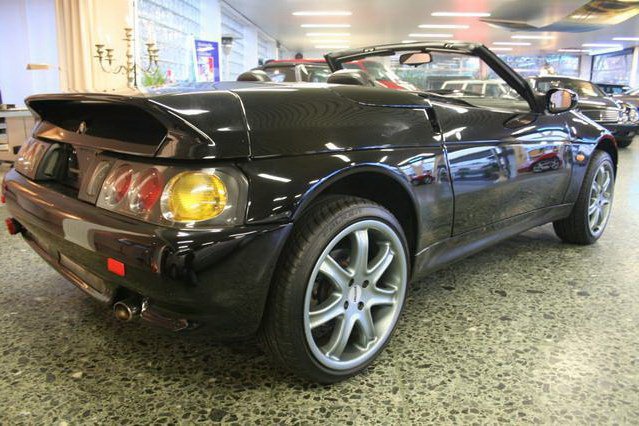
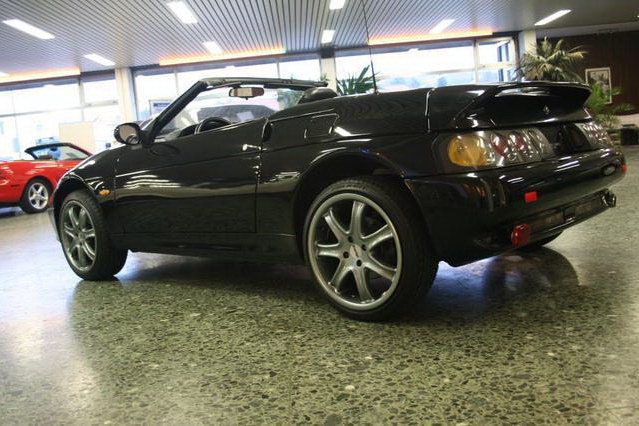
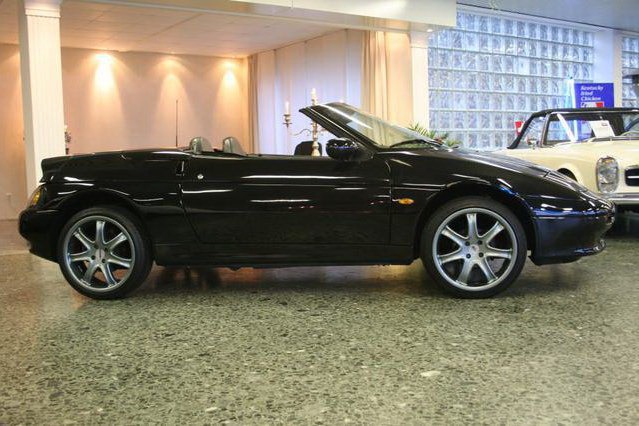
Kia Elan Roadster is a Lotus for the Masses ,Back in the late 1980s, two automakers with very different values and historical backgrounds each set out to build a roadster model for mainstream enthusiasts. The two brands were Mazda with its MX-5, also known as Miata in North America and Eunos Roadster in Japan, and Lotus, then owned by General Motors, with the Elan M100. Both two-seater models were presented in 1989, but only one managed to become a phenomenal sales success, and that was the MX-5.
Ironically, Mazda's goal was to create a direct descendant of the original Lotus Elan from the 1960s, with a nostalgic feel in terms of styling, lightweight philosophy and rear-wheel drive setup, adapted of course, to the times.
On the other hand, the British automaker purposely designed a futuristic successor that maintained the handling and nimbleness of the original Elan, but instead of RWD, opted for a FWD layout, the first and last time Lotus tried it on a production model.
Even though the modern Elan was praised for its handling and forward looking styling, it ultimately fell victim to its high price having to compete with the cheaper and more reliable MX-5, and the fact that it was not as entertaining on the road as a rear-wheel driven model. The Lotus Elan remained in production from 1989 to 1995 being offered with a choice of two modified 1.6-liter four-cylinder engines sourced from Isuzu, which was then also controlled by GM. The base, naturally aspirated version produced 130hp (132PS), while the Lotus-developed turbo variant was good for 162hp (164PS).
After ending production of the Elan in 1995, Lotus sold the car's rights to Kia Motors, which at the time, was an independently run automaker. Kia built the Elan in South Korea for three years from 1996 until 1999 (in 1997, Kia went bankrupt with Hyundai stepping in to take a controlling stake of 51 percent in the company the following year).
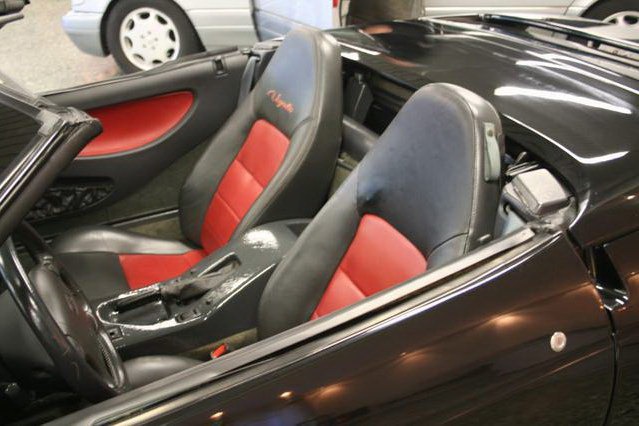
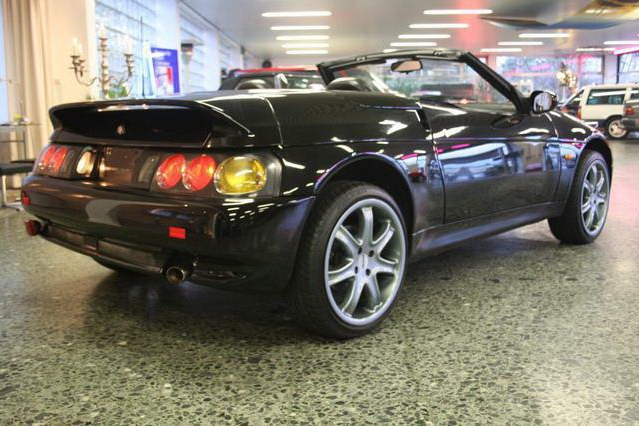
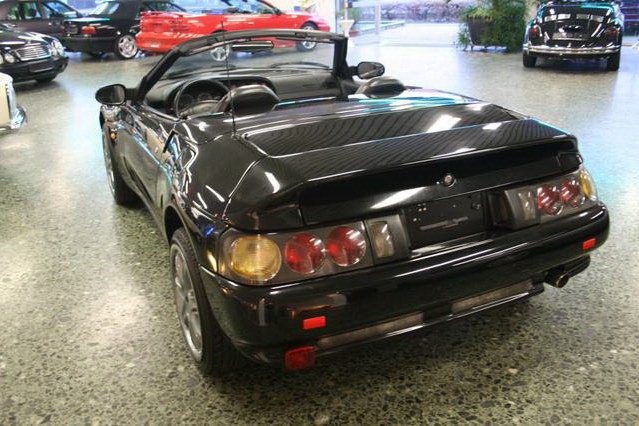
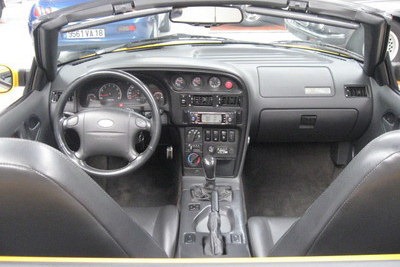
Visually, Kia's version of the Elan, was almost identical to the original Lotus model sans some negligible differences such as the badges, the goofy looking tail lamps and some interior parts such as the steering wheel, gear shifter knob and instrument panel graphics.
The most important modification to the design, however, was the replacement of the original Elan's 1.6-liter engine with one of Kia's own motors, a 1.8-liter four-cylinder engine rated at 152hp (154PS).
Needless to say, the Kia flavored Elan is a much rarer automobile than the original Lotus model, but we did manage to find two examples up for sale in Germany.
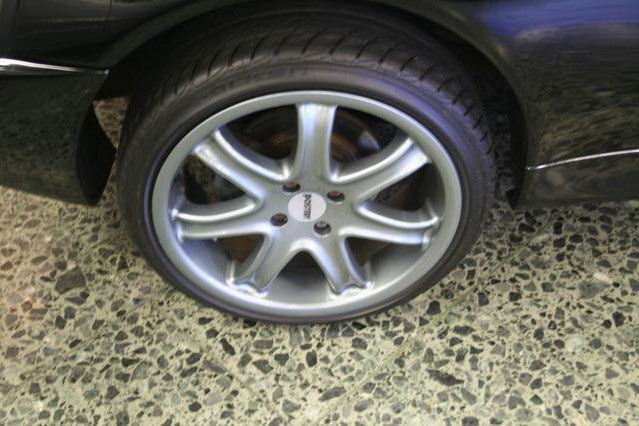
The first one, featured in a black finish, has covered 75,000km (46,600 miles) and is priced at €7,700 (US$10,170), while the yellow colored model with 65,000km (40,400 miles) could be yours for €9,600 (US$12,700).

PHOTO GALLERY

Kia-Elan-Roadster-1Kia-Elan-Roadster-2Kia-Elan-Roadster-3Kia-Elan-Roadster-4Kia-Elan-Roadster-5Kia-Elan-Roadster-6Kia-Elan-Roadster-7Kia-Elan-Roadster-8Kia-Elan-Roadster-9Kia-Elan-Roadster-10Kia-Elan-Roadster-11Kia-Elan-Roadster-12Kia-Elan-Roadster-13Kia-Elan-Roadster-14Kia-Elan-Roadster-15Kia-Elan-Roadster-16Kia-Elan-Roadster-17

Wednesday, May 2, 2012

Lotus Esprit V8 Cam-Shaft Tuning

Cam-Shaft, which has introduced a new package with both styling and performance modifications for Lotus Esprit V8.
A series of under-the-hood upgrades that include a software optimization, racing exhaust system, modified turbos and a new intercooler sourced from the Lotus Omega (Vauxhall Lotus Carlton), bump output to 485-horses (492PS). The tuner also replaced the stock 5-speed manual with a new 6-speed transmission.
As a result, the 0-100km/h (62mph) sprint time drops from 4.9 seconds to 4.3 seconds while top speed increases from 282km/h (175mph) to 305km/h (190mph).
A beefier set of Continental wheels and AP Racing brake system with perforated 330 mm discs complete the hardware upgrades.
Visually, Cam-Shaft dressed the Esprit V8 in a John Players Special-theme wrap inspired from the Lotus F1 team of the time.

Lotus Esprit V8 Cam-Shaft Tuning PHOTO GALLERY

Lotus-Esprit-V8-Tuned-9Lotus-Esprit-V8-Tuned-1Lotus-Esprit-V8-Tuned-8Lotus-Esprit-V8-Tuned-11Lotus-Esprit-V8-Tuned-7Lotus-Esprit-V8-Tuned-2Lotus-Esprit-V8-Tuned-4Lotus-Esprit-V8-Tuned-3Lotus-Esprit-V8-Tuned-6Lotus-Esprit-V8-Tuned-5Lotus-Esprit-V8-Tuned-10

One-Off Lamborghini Aventador J Speedster Tuning Imagination

Prindiville's imaginary (i.e. photoshop) creation builds on the limited production design and performance package it offers for the Lamborghini Aventador LP700-4 coupé, of which only eight examples will be produced.
The UK tuner says it would start by replacing many original panels with new and lighter parts made from carbon fiber and finish the exterior in a silver shade (or any other color for that matter).
The tuner would then move on to the engine bay to add a twin titanium or stainless steel exhaust system along with some electronic tweaking to boost the 6.5-liter V12's output from 700- to 805-horses.
Prindiville says that the 805hp Aventador J could complete the 0 to 62 mph (100 km/h) sprint in around 2.5 seconds, and top out at 220 mph (350 km/h).
Other performance upgrades would include the uprated braking system with ceramic discs and adjustable suspension.
As for the interior, Prindiville would dress the cabin in black leather and alcantara and add a five-inch LCD TV screen for the new infotainment system with a DVD player, satellite navigation, and bespoke software featuring maps, setups, and telemetry.
Commenting on the Prindiville Lamborghini Aventador J concept, company founder Alex Prindiville, said:
“Although this model was created as a one off-example, the design which we have created showcases the beauty and technology which we are able to offer clients across ourcustom-built supercar model range including the Aventador. The new supersports car is undisputedly one of the most exciting and extreme high performance cars ever built by Lamborghini, and we will be keeping our eyes firmly peeled on the forthcoming product line-up from Sant'Agata Bolognese.”
 
PHOTO GALLERY


Monday, April 30, 2012

Audi R8 e-Tron All-Electric at Nürburgring

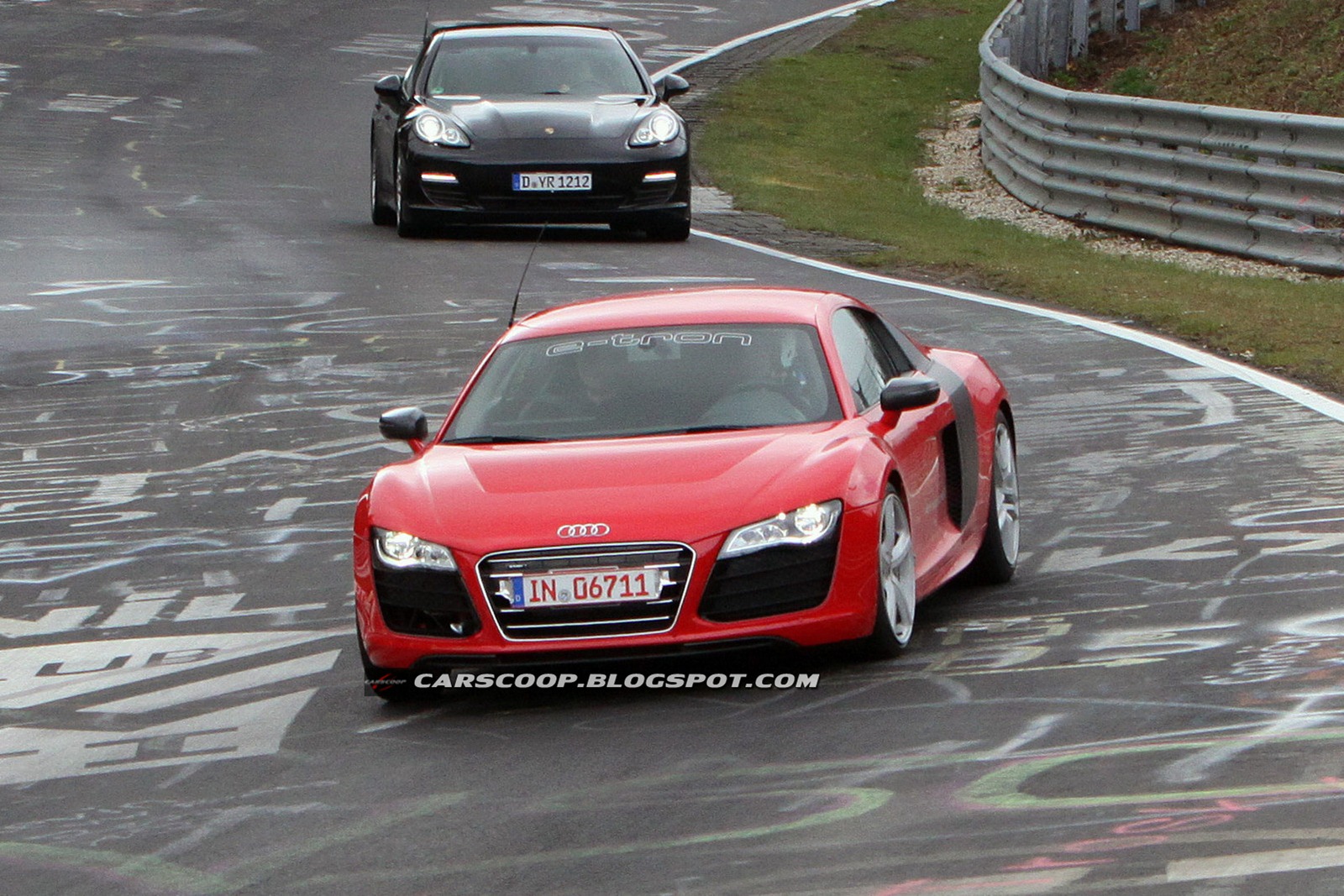
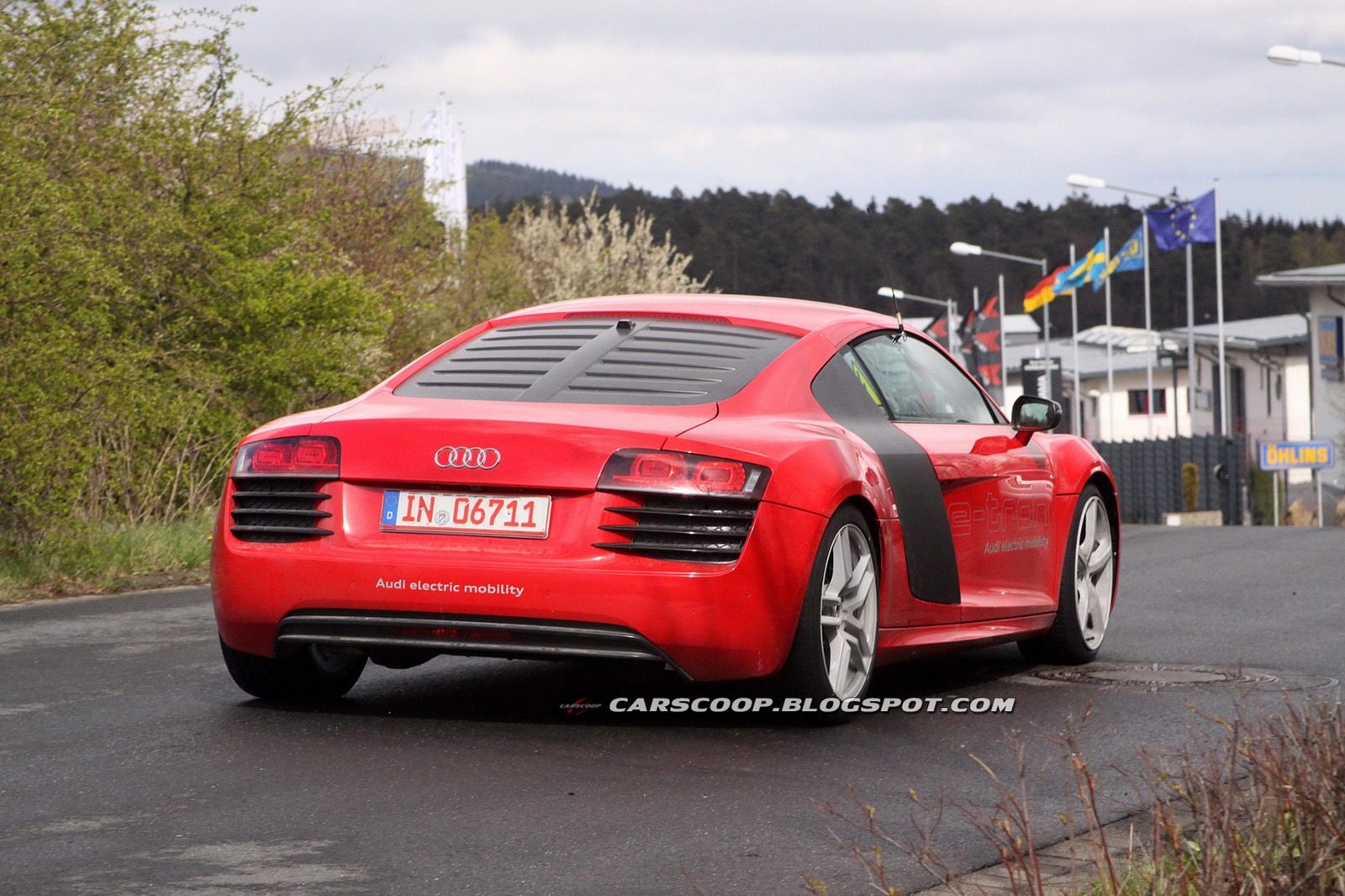
Our spies caught up with an undisguised prototype in production trim silently testing on the Nürburgring. The only thing missing from the test car are the chrome bars on the side vents under the barely noticeable modified LED headlamps, while the production car will also get a different set of wheels.
The prototype is fitted with a six-point grille that will also make its appearance on the soon-to-be-revealed facelifted 2013 R8. The e-Tron version can be identified by the special black cover that replaces the regular model's window, the deep scoop on the hood and the absence of exhaust pipes on the modified rear apron.
However, what really separates the e-Tron from the rest of the range is the electric driveline. The German supercar makes use of four electric motors, two each at the front and rear axles driving all four wheels, which will produce an estimated combined output of 230kW or 308hp (313PS).
Like the concept model, the production e-Tron will feature a lithium-ion battery that can be charged through any household outlet.
The R8 e-Tron will be built in a limited number of units with pricing in Europe believed to be in excess of €150,000 (US$200,000).
Audi R8 e-Tron All-Electric at Nürburgring


Audi R8 e-Tron All-Electric at Nürburgring PHOTO GALLERY
Audi-R8-e-Tron-3
Audi R8 e-Tron All-Electric at Nürburgring

Audi-R8-e-Tron-1Audi-R8-e-Tron-2Audi-R8-e-Tron-4Audi-R8-e-Tron-5Audi-R8-e-Tron-6Audi-R8-e-Tron-7Audi-R8-e-Tron-8Audi-R8-e-Tron-9Audi-R8-e-Tron-10Audi-R8-e-Tron-11Audi-R8-e-Tron-12Audi-R8-e-Tron-13Audi-R8-e-Tron-14